
Solar technology is evolving rapidly. Homes and businesses have more choices than ever, thanks to new designs and improved installation methods. The emergence of vertical solar panels is one of the biggest innovations today. Many are no longer installing panels on flat roofs but on walls or angled facades. This new style provides buildings with a clean, modern appearance and boosts energy production in new, imaginative ways.
This article explains why vertical solar system solutions are becoming more popular, how they differ from traditional systems, and their benefits in aesthetics, performance, and return on investment. It also discusses how technologies such as building-integrated photovoltaic panels (BIPV) and photovoltaic glass can enhance vertical solar systems. By the end, you will see why vertical solar panels are a growing choice for homeowners and business owners.
What Are Vertical Solar Panels?
Vertical solar panels are photovoltaic panels installed on vertical or near-vertical surfaces. They are not laid on a roof, but on walls, fences, facades, and other upright structures. This is what people refer to when they discuss installing solar panels in vertical wall designs.
You might have noticed houses with smooth, dark panels running along the outside walls. They are typically vertical solar systems. They generate electricity by trapping sunlight that enters the sides of a structure during the day. This type is particularly useful in areas where roofs receive insufficient sunlight or the roof area is too small.
Why Use Vertical Solar Panels?
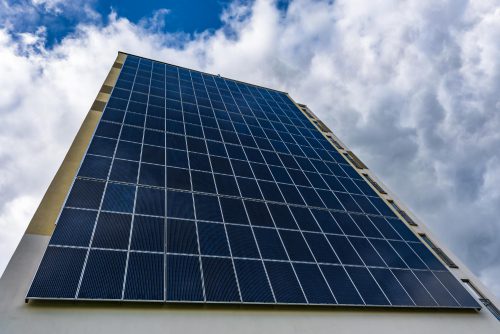
The biggest benefit of vertical panels is that they enable buildings to generate energy in spaces that would otherwise be unused. Several homes and commercial environments receive consistent light on their walls at certain times of day. Using those walls to create power-producing surfaces increases your solar system’s output without requiring additional land or roof space.
Vertical installations also perform well in snowy or rainy seasons. Snow and debris slide off since the panels are placed in an upright position. This helps safeguard energy production during winter, when horizontal panels may remain covered for extended periods. A vertical panel will remain cleaner longer in cities where dust or pollution tends to accumulate on flat surfaces.
Vertical Solar Panels Efficiency: The Real Story
Another question may arise about the efficiency of vertical solar panels compared to standard rooftop systems. The fact is that vertical panels may not get as much direct sunlight in the middle of the day, which may decrease peak production. Nevertheless, during mornings, late afternoons, and during winter when the sun is low in the sky, they gather more sunlight.
This brings about a more balanced production pattern. Vertical systems also result in a more even distribution of their output throughout the day, rather than producing high bursts of energy solely at midday. Most homeowners prefer this because it is better at keeping up with their energy consumption. Even the vertical panels can perform better in winter in cold areas than those that lie flat and are covered with snow.
Vertical systems are also effective on east- and west-facing walls. This allows a building to receive sunlight in several directions. Although the overall daily energy production may be somewhat less than a rooftop setup, the energy distribution will be more relevant for practical applications.
Aesthetic Benefits of Vertical Solar Systems
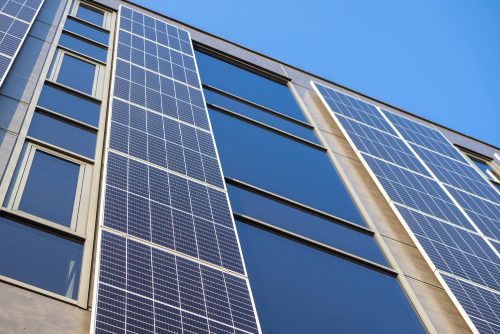
Contemporary buildings are very concerned with design. People desire clean lines, beautiful facades, and materials that can add character to a place. Vertical panels perfectly fit this trend.
Vertical-mounted solar panels do not appear as an extension, but naturally integrate into the exterior surfaces and walls. They can even substitute elements of the building structure, making the design look smoother and more purposeful.
This is where building-integrated photovoltaic panels and photovoltaic glass shine through. BIPV systems use panels that can also serve as construction materials. They may resemble decorative glass, cladding, or even metal finishes, yet still generate energy.
In the case of BIPV, solar is integrated into the building. No separate panels are required, such as for a roof. The building itself turns into a solar system.
This offers a contemporary look for property owners and promotes more environmentally friendly design decisions without losing beauty.
Vertical Solar Panels for Homeowners
The use of vertical solar panels for homes is gaining popularity, particularly in residential areas where roof shapes or orientations do not allow regular panels to work well. There are complex roofs, heavy shading and insufficient space in some of these homes. Rather than abandoning solar, households put solar panels on their west-facing or south-facing walls.
Homeowners who desire to have a minimalist appearance should also use vertical panels. Most individuals favour solar designs that do not distinguish themselves from others in the home. The system is virtually invisible because vertical installations can match the wall’s colour, style, or pattern.
These systems can also assist with insulation. Panels installed on external walls also provide additional insulation, minimizing heat loss in winter and overheating in summer. This reduces energy use for heating and cooling, enhancing efficiency.
Installing Solar Panels on a Vertical Wall: What It Involves
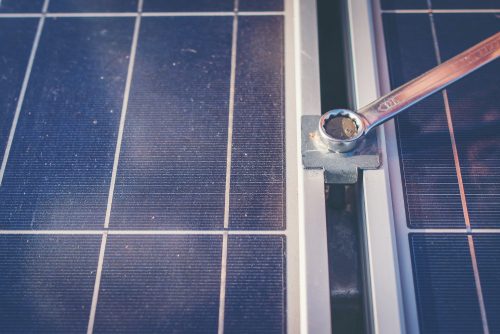
The vertical solar panel installation process depends on the building’s design. The majority of walls should be robust to support the weight of panels. Installers also consider the optimal direction of sunlight, the height of the setup, and the connection between the panels and the main electrical system.
Solar panels may be installed in two main vertical ways. One technique is to fix panels to the outer wall with a mounting system. This is typical of retrofits, in which the solar system is installed after the building is complete.
The second technique involves BIPV technology. In this configuration, the panels substitute portions of the building itself. They can serve as wall cladding or exterior siding and even as window glass. This approach integrates energy generation into construction materials, making the solar system part of the original design.
Both techniques are non-hazardous and workable in the hands of experts. They also adhere to strict building codes to ensure the panels can withstand weather, wind, and temperature changes.
How Vertical Solar Systems Improve ROI
Vertical solar systems not only look good. They are also useful in boosting return on investment.
Installing panels on vertical surfaces increases the overall usable space for solar power. Property owners can make use of both walls and facades, not just roofs. This increases possible power output.
Vertical panels are also more durable because they stay cleaner. Dust, leaves and snow fall off much more easily. Subsequently, cleaner panels generate more energy, enhancing the monetary worth of the system.
BIPV systems are even better in terms of ROI since they substitute materials that you would otherwise be paying for anyway. For example, you can install photovoltaic glass or built-in solar cladding as an alternative to purchasing regular glass or metal siding. These materials are structural and generate energy simultaneously, thereby reducing long-term costs.
The other advantage is that the vertical panels capture sunlight at more angles. Morning and evening sun is put to good use rather than going to waste. This helps minimize electricity bills and increase output every year.
Numerous governments and provinces offer incentives for solar installations, including vertical installations. These programs help reduce installation costs, making the process more rewarding for homeowners and businesses.
Vertical Solar for Businesses and Large Projects
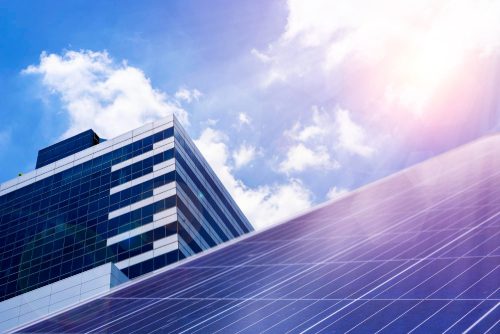
Vertical solar designs are even more beneficial for commercial buildings. The tall buildings have enormous wall surfaces that can collect sunlight during the day. Once made into energy-producing surfaces, the cumulative output can be huge.
Brand image is also important to companies. The use of smooth solar glass panels on buildings also conveys a great message regarding sustainability and innovation. It demonstrates to customers, partners, and employees that the company takes clean energy and long-term responsibility seriously.
BIPV systems work particularly well in commercial cases. They allow architects to exercise creative freedom in designing contemporary exteriors without compromising energy efficiency. Photovoltaic glass is applied to office windows, entrance walls, and entire glass facades, turning the entire building into a power generator.
The Future of Vertical Solar Systems
Vertical solar systems will only gain more popularity as cities continue to expand and land becomes scarcer. Rooftops are precious, but wall surfaces are more abundant. Vertical systems enable individuals to harvest sunlight at various angles, use their building surfaces more effectively, and minimize energy use throughout the seasons.
These systems are more powerful and affordable through the use of stronger materials and new solar cell technologies. BIPV and photovoltaic glass offer access to designs that are both functional and beautiful. Vertical solar technologies will likely become a standard feature in many new homes, schools, offices, and other public buildings over the next few years.
Conclusion: Vertical Solar Panels Offer Energy, Beauty, and Strong Value
Vertical solar panels combine performance, design, and long-term savings in ways that are sometimes unavailable to traditional rooftop systems. They open new opportunities for buildings with limited roof space, improve energy collection during mornings and evenings, and add architectural appeal through modern materials such as building-integrated photovoltaics (BIPV) and photovoltaic glass. Additionally, they stay cleaner, are more durable, and help buildings use space more efficiently.
Vertical solar systems are an excellent choice for new projects, solar upgrades, or advanced solar applications. Ontario Panelization offers expert guidance, assistance, and customized solutions. Our team will assess your building’s needs, design a suitable system, and turn your solar vision into reality with high-quality materials and professional installation. Contact us today to get started on your project!