
The facade of a building is not merely a shell, but its identity, its protective coating, and its relation to the environment. The selection of the right facade system may affect not only the appearance of a building but also its functionality, stability, and sustainability. The modern design industry offers a great number of different types of facade systems, each of which has its own advantages. The difficulty lies in the fact that you need to know which one fits your project objectives better.
This guide will discuss the most popular facade materials. Sleek aluminum solutions, classic stone, and new energy-producing panels are just some of the solutions that show how modern construction is striking a balance between beauty and functionality.
1. Ceramitex – Ceramic Facade System
The ceramic facade has emerged as one of the most reliable options in modern buildings. Sintered ceramic panels are a combination of beauty and strength, and they are a material that can withstand extreme weather, fading, and offer great fire protection.
They are frequently selected in cultural institutions, offices, and educational facilities where visual identity is as important as long-term performance. They are a flexible choice of building facades because of the possibility to customize finishes and textures.
Ceramic is a smart investment for developers seeking a low-maintenance solution that is both aesthetically pleasing and safe. It is also an eco-friendly option, with production processes still being developed to be more sustainable.
2. Aluminum Composite Material (ACM)
Aluminum composite material is one of the most popular types of facade cladding. ACM panels consist of fine sheets of aluminum that are bonded to a core to produce a lightweight but structurally sound product. Their greatest strength is that they are flexible: they can be cut, curved, or shaped to attain virtually any design.
Being offered a wide variety of colours, designers can make bold statements or classical elegance. ACM is flexible, making it a popular choice for facade materials on office towers, shopping malls, or transport stations.
The other advantage is that it is cost-effective. ACM provides the compromise between cost efficiency and luxurious design, providing architects with the freedom to be creative without exceeding the budget. It is particularly applicable in projects with a short installation schedule, owing to its lightweight structure.
3. Aluminum Plate Panels
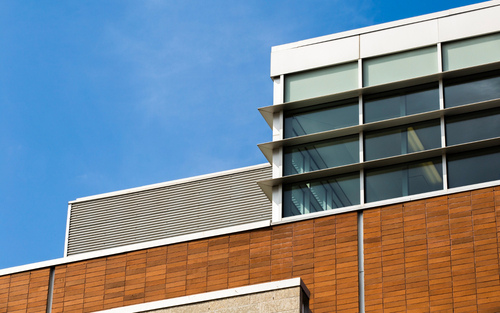
Aluminum plate panels are a reliable choice for projects that demand exceptional strength. These panels are made from solid aluminum sheets, unlike ACM, which has a core. This gives them high impact resistance.
Aluminum plate panels provide a clean, minimalistic appearance, commonly used in government buildings, airports, and skyscrapers where structural integrity is paramount. They are also very effective in extreme climatic conditions, as they are resistant to corrosion and have a long-lasting performance.
Although this option is heavier and more costly than ACM, it remains a significant component of different types of facades due to its successful performance in extreme conditions without compromising style.
4. Specialty Veneers
Standard finishes are not always necessary in all projects. Specialty veneers offer innovative opportunities in cases where architects desire a unique appearance. These panels can imitate a range of textures and styles, both natural and artistic, and enable the creation of unique building facades.
Specialty veneers are especially useful when developers want to distinguish their structures in competitive markets. They can generate warmth, personality, or exclusivity. They are part of the modern forms of facade systems that allow buildings to shine and yet enjoy the advantages of engineered performance standards.
Veneers remind us that facades are not merely shields but can also be canvases on which architectural expression can be projected by providing a combination of aesthetics and functionality.
5. Exotic Metals
Exotic metals like zinc, copper, or stainless steel are prominent when prestige and high-impact visuals are the priority. These materials age naturally, and they develop dynamic looks that change with the building.
Exotic metals are among the most luxurious forms of facade material and convey permanence and value. They are commonly applied in cultural landmarks, financial institutions, and luxury retail spaces, where image and reputation are of utmost importance.
Their beauty is in their striking appearance and durability. These metals resist weathering, and with little maintenance, they can last decades. Their capacity to change in tone and texture with age makes them one of the most unique forms of facade cladding in the market today.
6. Porcelain Enamel Panels
Porcelain enamel panels are smooth and glossy and add life to the exterior of buildings. They are famous in terms of their outstanding colour stability because they do not fade even after years of being in the sun. This renders them one of the most durable options in modern facade systems.
These panels are commonly used in institutional or transportation projects, where a clean and polished look is needed. They are resistant to scratching, chemicals, and graffiti, and this implies that there is minimal upkeep. Porcelain enamel is one of the types of building facades that are especially appreciated in terms of their ability to combine bold design with the practicality of the building.
7. Solstex – Solar Facade
Sustainability is not a choice anymore; it is a requirement. And that is where the solar facade comes in. Solstex panels combine power efficiency with beauty, making exterior cladding a power-generating surface.
A solar panel facade is not just a shield to a building like traditional finishes, but it also helps in the energy performance of the building. These systems employ building-integrated photovoltaic panels (BIPV) to minimize dependence on external sources of energy.
To architects and developers, this implies that it is possible to achieve sustainability without compromising on aesthetics. The solar panels are perfectly integrated into the facade, providing an innovative solution for projects that aim to be at the forefront of green design. Ontario Panelization has been at the forefront of providing innovative systems, demonstrating that energy efficiency and impressive architecture can be combined.
8. Natural Stone Facade
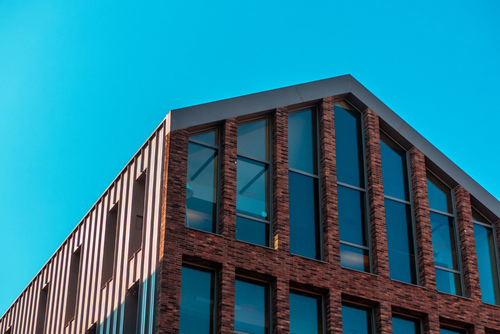
Not many materials possess the eternal beauty of stone. Beauty, strength, and prestige are the qualities of a natural stone facade that are valued. Stone cladding, be it granite, limestone, or marble, gives the impression of permanence that is unparalleled by other systems.
The current construction techniques enable the use of stone in thinner panels, which reduces weight without affecting strength. This renders it more versatile for numerous projects, including high-rise towers and residential buildings. Natural stone facade cladding is particularly common in civic institutions, whereas these facades on homes add a touch of luxury and permanence to residential homes. According to reports, “The global natural stone market size was estimated at USD 10.17 billion in 2024 and is projected to reach USD 14.11 billion by 2030” (Grand View Research).
Stone, being one of the oldest forms of facade material, provides not only aesthetic appeal but also durability, which can last for centuries when well-maintained. Natural stone remains a stable option in both traditional and modern applications, thanks to the expertise of Ontario Panelization.
How to Select the Right Facade for Your Project
When it comes to the selection of the different types of facades, it may be overwhelming. The following are some of the important points to consider:
- Climate and environment: Choose materials that resist local weather conditions, whether it is freeze-thaw or UV.
- Project type: Institutional buildings can prefer durable materials such as porcelain enamel, whereas homes can choose a natural stone facade.
- Aesthetic objectives: Determine whether your project requires a delicate grace, such as a ceramic facade, or a radical innovation, such as a solar facade.
- Budget and lifespan: Compare initial expenses with durability; ACM and veneers can be quite affordable, whereas stone can be considered long-term.
- Sustainability requirements: Consider options like a solar panel facade for energy efficiency.
Ontario Panelization: Expertise in Every Facade System
Ontario Panelization has years of experience in the industry and can offer unparalleled expertise to any project, regardless of its size and complexity:
- More than 40 years of experience
- Experts in the different types of facade materials, such as ACM and stone
- Innovators in incorporating contemporary choices, such as solar facade technologies
- Installation of various types of facades using the Unity attachment system
- Reliable collaborator with architects and contractors in Canada and the USA
This level of expertise guarantees that all projects receive the input of technical excellence and creativity in design.
Conclusion
Facade systems not only determine the look of a building but also its performance, efficiency, and durability. Modern architects and developers can choose between a broad range of solutions, including versatile ACM, luxurious stone, and innovative solar technology.
Knowing the advantages of both alternatives, project leaders can make an informed decision that is aesthetically pleasing, sustainable, and budget-friendly. Ontario Panelization has the experience to produce facades that are unique and can withstand the test of time, with proven expertise in all these systems: Sintered Ceramic Façade System, Aluminum Composite Material Façade System, Aluminum Plate Façade System, veneers, exotic metals, porcelain enamel, Solar Façade System, and Natural Stone Façade System. Contact us to learn more.